SENKO V-PRO · POSITIONING · WEB PAGE + MAGAZINE AD · 2026
WORK № 05V-PRO Product Page and Ad
A detector is only safe if it gets carried
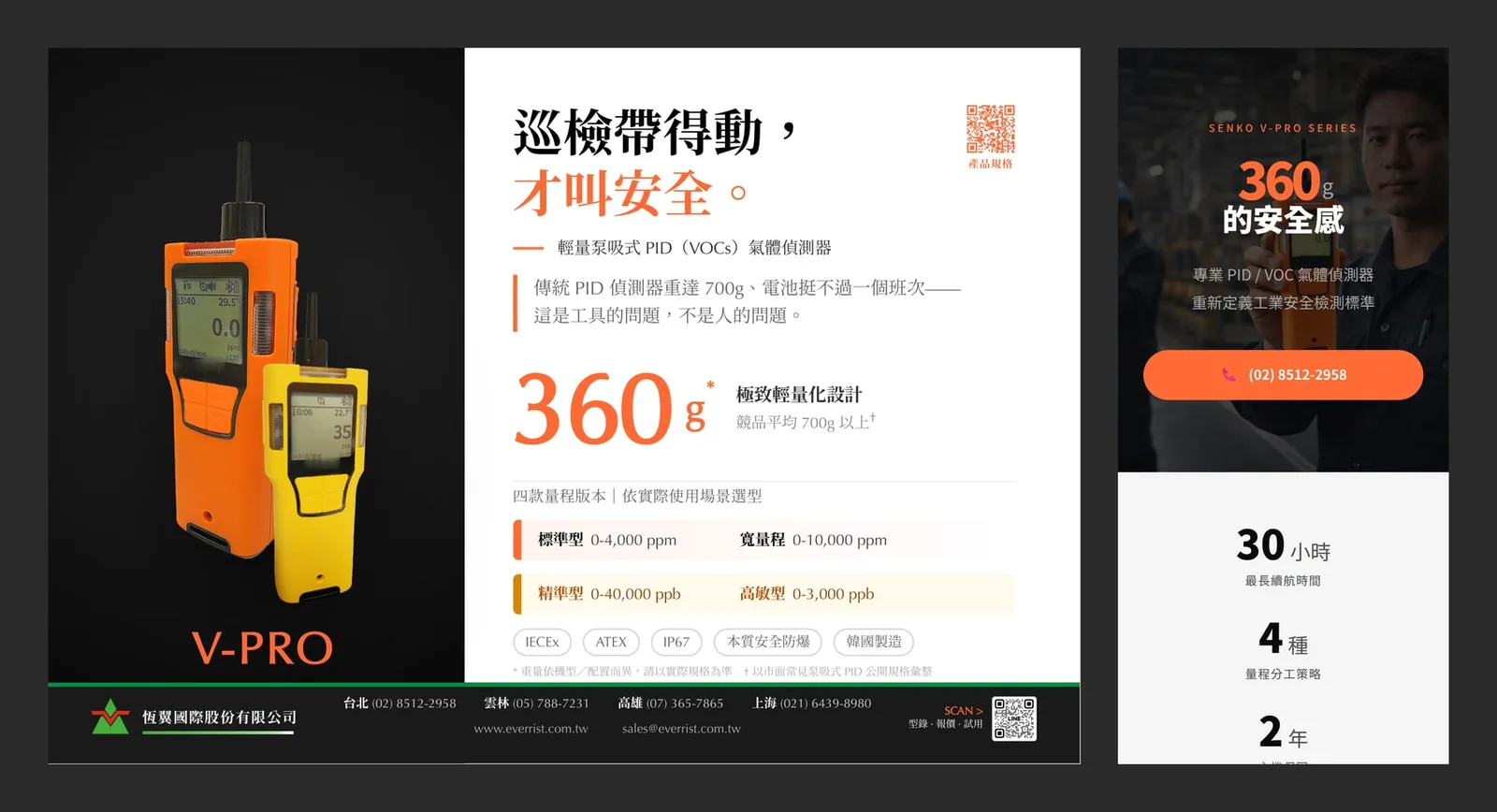
The V-PRO couldn't out-brand Honeywell, and on specifications it could lose to other makers. It could beat every comparable detector on weight — 360 g against a typical 700 g. I built its product page and a magazine ad on that one claim.
- DATE
- JAN 2026
- CONTEXT
- B2B gas-detection distributor, one-person product team; a product page for the company website and a print ad
- ROLE
- Positioning · Copy · Page structure · Visual design · HTML / CSS · Print-ready PDF
- STACK
- HTML / CSS for both; the ad was built in HTML and exported from Chrome to a print PDF with bleed
THE 45-SECOND READ
On paper, the V-PRO is one more handheld PID (VOC) detector. Against Honeywell and other established names it loses on brand credibility, and on specifications it could lose to other makers. A feature list would put it in a comparison it can't win.
DECISIONFind the one thing it beats every comparable detector at — weight — and build everything on it. Then tie the weight to a real problem — inspectors leave heavy detectors behind — so being light means being safe.
PRODUCTA long-scroll product page that argues one claim from top to bottom, and a magazine ad that carries the same claim to print.
STATUSThe page was live on the company website; it was taken down after I left and no one was maintaining it. The ad ran in an industrial-safety magazine.
On brand, Honeywell wins. On specs, someone else might. The V-PRO needed a way in — and the one comparison it won against every rival was weight.
THE POSITIONING PROBLEM
THE PRACTICE / 01
Pick the fight you can win
Weight became the headline instead of one feature in a list. But a number only sells if it solves something, so the page and the ad both name the problem first: older PID detectors weigh around 700 g and don’t last a shift, so inspectors leave them behind. “It’s the tool, not the people.”
THE CLAIM, IN NUMBERS
THE PRACTICE / 02
One argument, top to bottom
 01
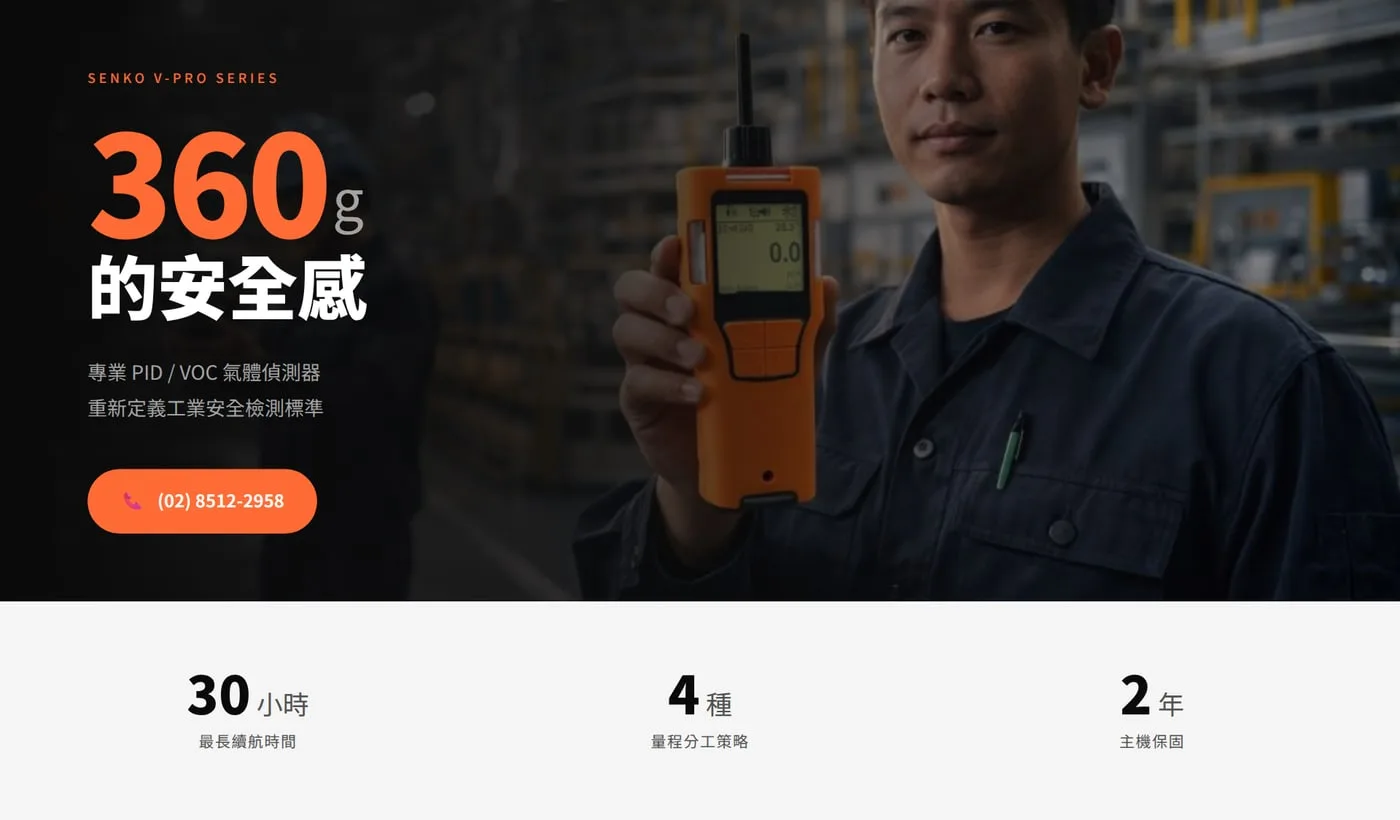
01Open on the claim
"360 g" is the headline, with three numbers directly underneath — a 30-hour battery, 4 measurement ranges, a 2-year warranty. The product name is a small kicker; the claim comes first.
 02
02Name the problem
"By the time you can smell it, it's too late." Older PID detectors weigh around 700 g and don't last a shift, so inspectors leave them behind. The page says it plainly: the tool, not the people. That turns being light into a safety argument.
 03
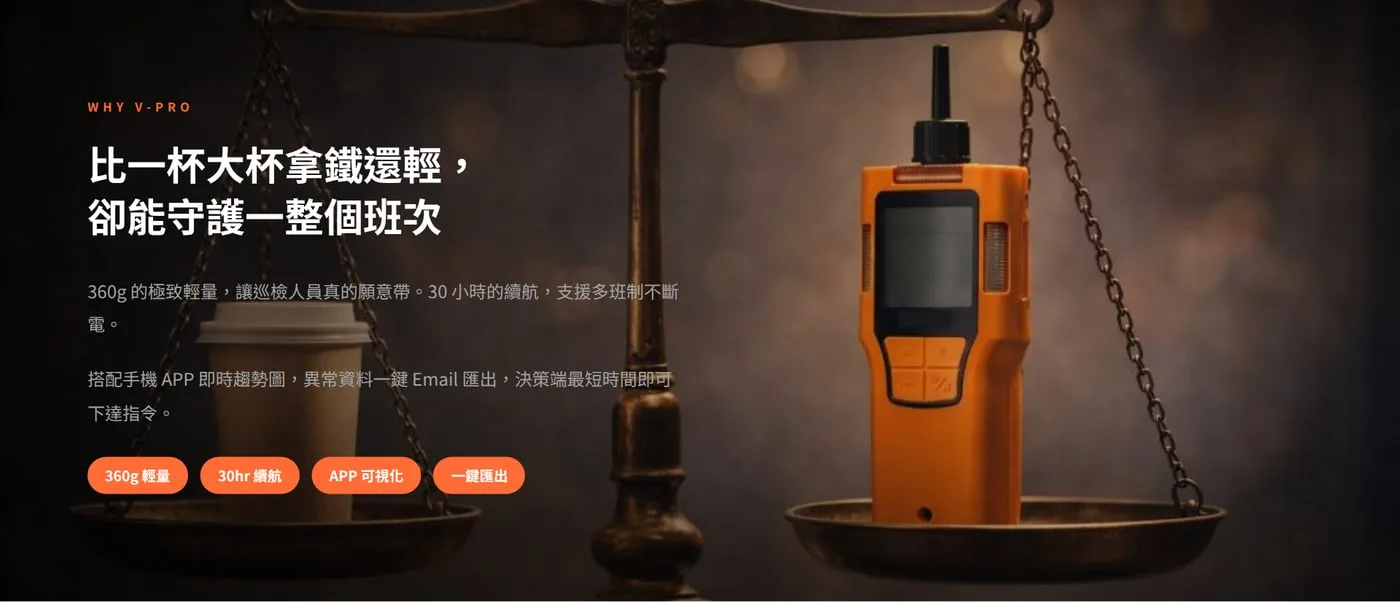
03Make the number felt
"Lighter than a large latte, yet it covers a whole shift." 360 g is abstract; a coffee is something everyone has held. The balance scale shows the comparison, and four tags sum up the case — 360 g, 30 hours, app trend charts, one-tap export.
 04
04Choose by the job
Four models instead of one compromise — "選對量程,才有準度" (choose the right range to get accuracy). Each card lists named jobs, from general plant rounds at 0–4,000 ppm to cleanroom trace monitoring at 0–3,000 ppb.
 05
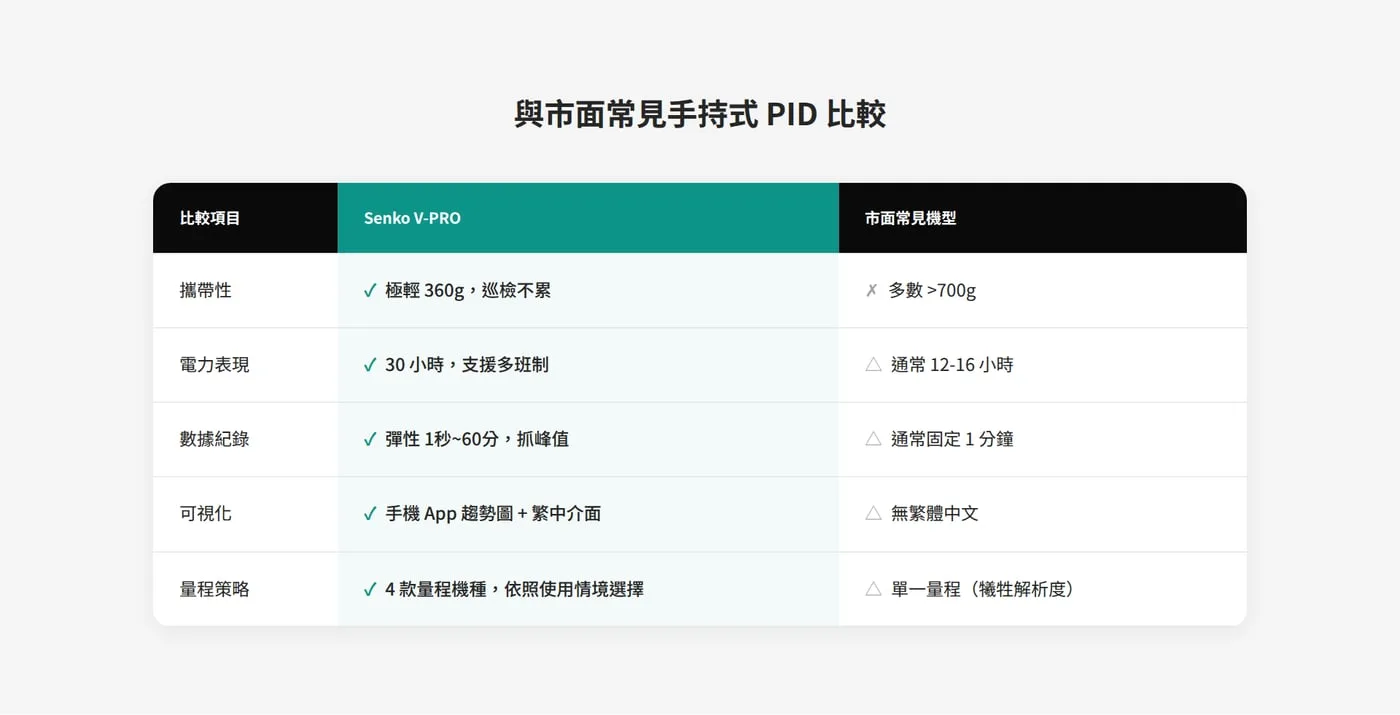
05Compare with the category
A side-by-side with common handheld PIDs — the category, not a named rival — on weight, battery, logging interval, app and range strategy.
 06
06Specs last, then the ask
The full spec sheet comes after the argument, as proof rather than as the pitch. The page closes on a free on-site demo and help choosing a model.
SCROLL IT YOURSELF
The same page at phone width
The portfolio copy keeps the page’s original layout and copy, with the product photos it used. On a phone the sections reflow into a single column; the order of the argument stays the same.
THE PRACTICE / 03
The same claim, in print
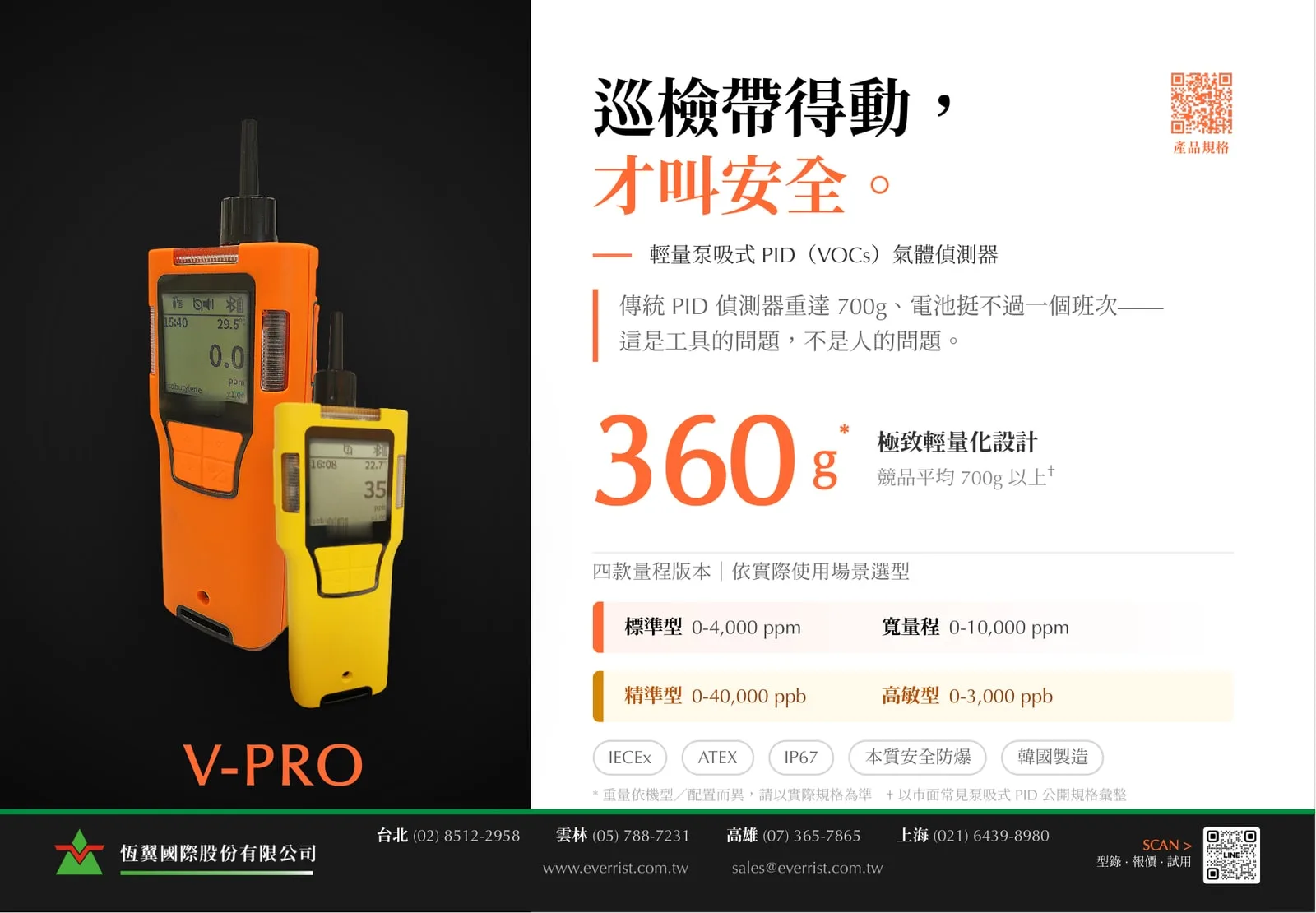
- 01The headline names the outcome
"巡檢帶得動,才叫安全。" — it's only safe if inspectors will carry it.
- 02The problem, in one line
Nearly the same sentence as the web page — heavy detectors with short batteries get left behind; it's the tool, not the people.
- 03The claim, in orange
360 g, with an asterisk — the weight varies by model and configuration.
- 04The comparison, sourced
"Competitor average 700 g or more" carries a dagger — compiled from the public specs of common pumped PID detectors.
- 05Four ranges in two rows
The page's four ranges, in two rows.
- 06Certifications as plain badges
IECEx, ATEX, IP67, intrinsically safe, made in Korea.
- 07Both footnotes, in print
Every comparative number in the ad is qualified where it appears.
- 08A QR code for the specs
- 09A QR code for the next step
LINE, for a catalog, a quote or a trial — the ad ends in an action, not a slogan.
THE PRACTICE / 04
Print from the same tools
The ad was built in HTML and CSS, like the product page, and exported from Chrome to a print-ready PDF with bleed. One toolset for the pages and the print meant a one-person team could produce both.
READING NOTE / OPEN
The page is no longer online — this copy is.
The portfolio copy keeps the original layout and copy; the product photos are the ones the page used.