EVERRIST · TRADE-SHOW CATALOG + VISUAL SYSTEM · 2026
WORK № 04Gas Solutions Catalog
A catalog worth keeping
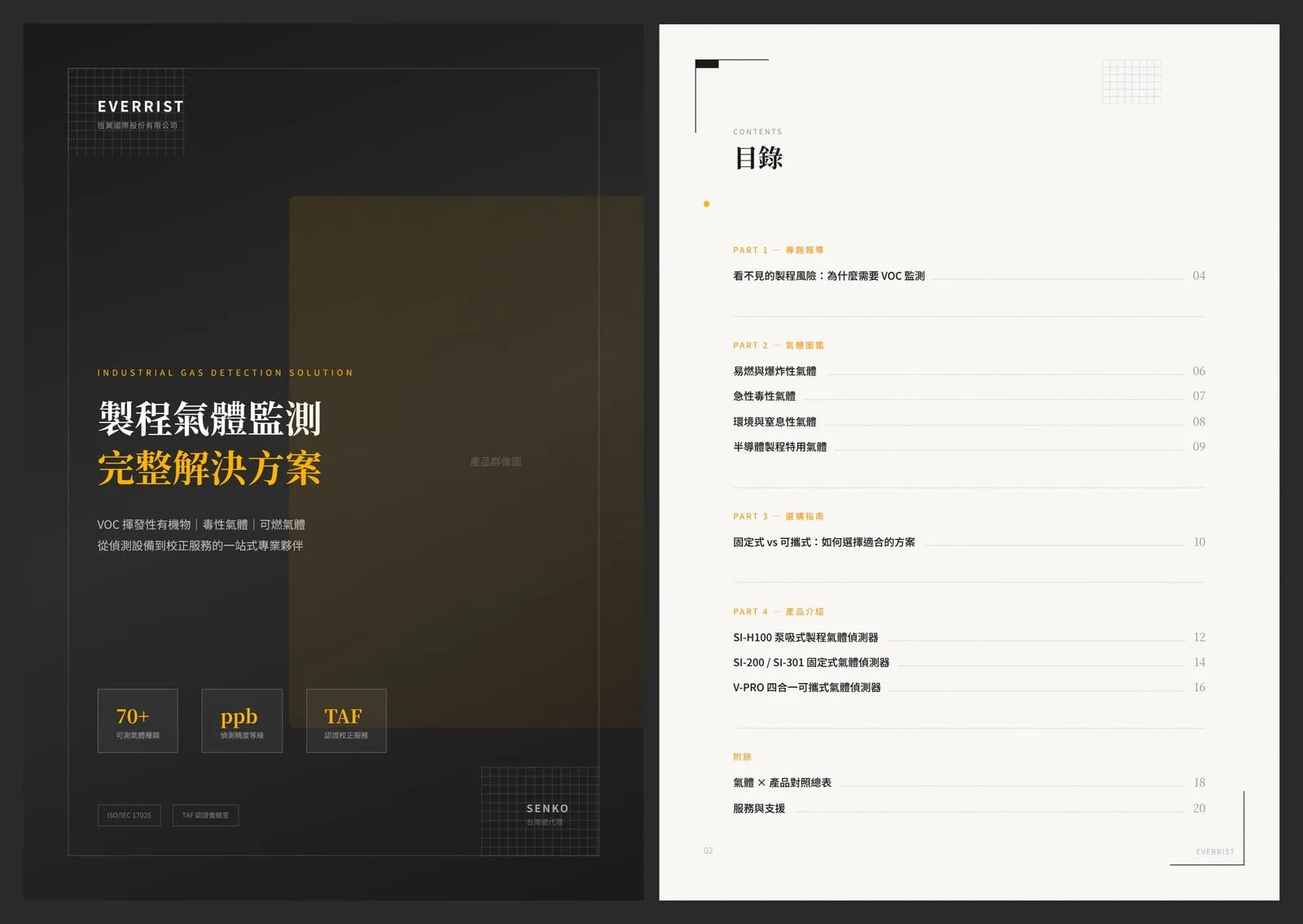
For a trade show and a year focused on SENKO products, I replaced a 68-page, brand-by-brand catalog with a themed one that starts from the gas — built to be kept and read, not thrown away.
- DATE
- JAN—FEB 2026
- CONTEXT
- B2B gas-detection distributor, one-person product team; a new catalog for a trade show, in a year when sales focused on SENKO products
- ROLE
- Concept · Content structure · Copy · Layout · Visual system
- STACK
- HTML / CSS laid out at A4 (210 × 297 mm per page) · LLM-assisted drafting with human review
THE 45-SECOND READ
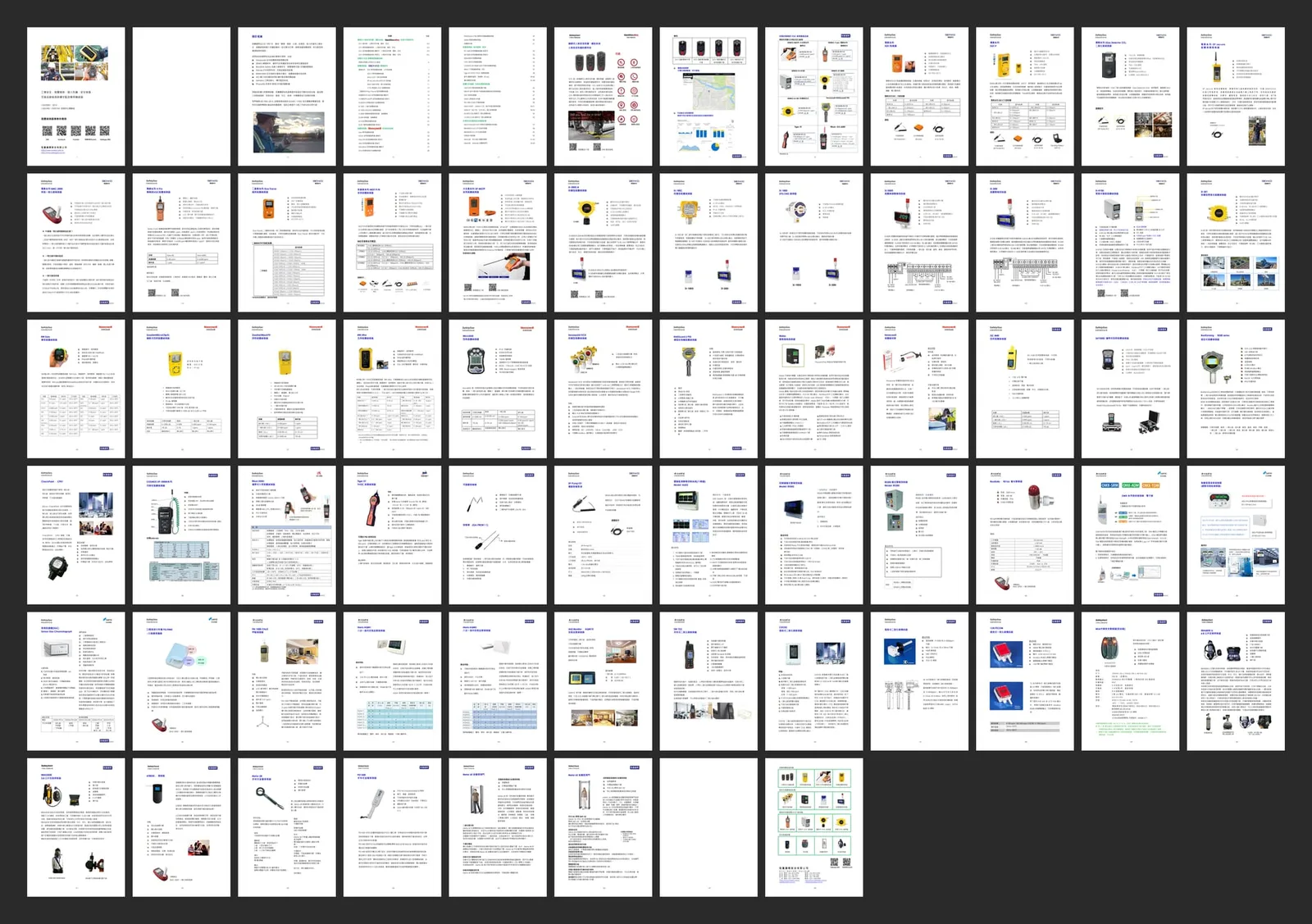
The company's catalog ran 68 pages, organized by brand and model across everything it sold, from gas detectors to metal-detector gates. With that many products and gases, it never answered the question customers actually bring — which detector for which gas?
DECISIONMake it themed instead of complete — one brand, one subject (process gases) — and organize it the way customers think — the gas first, the product second. Then make it useful enough to keep.
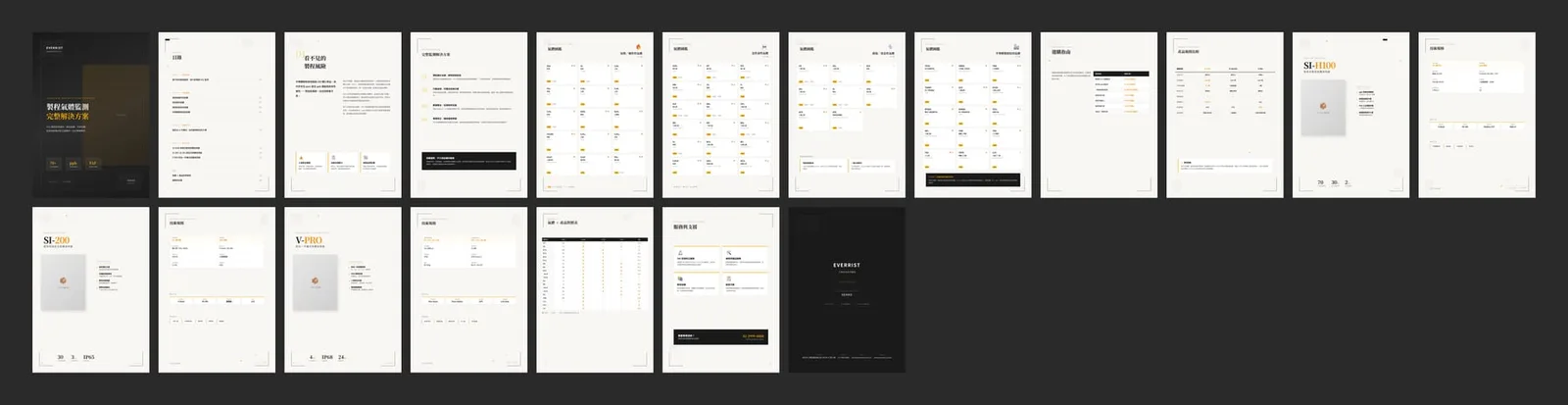
PRODUCTA catalog design of about 20 pages — a feature story, a gas encyclopedia in four hazard groups, a buying guide, product spreads and a gas × product matrix — plus a VOCs flyer for the same show and MGTP-P product pages in the same visual language.
STATUSThe owner had no objections to the direction, but I left the company before it went to the printer. The MGTP-P pages are live on the company website.
A product catalog picked up at a trade show is easy to throw away. One with real reference value might be kept — and every time it's opened again, it's another chance to sell.
THE CASE I MADE TO THE OWNER
BEFORE → AFTER
Brand count from the old catalog's own list of represented brands.
THE PRACTICE / 01
Themed, not complete
The old catalog tried to show everything the company carried, one model per page, grouped by brand. With that many products and gases it was hard to read, and it never clearly said which detector a reader needed for which gas.
The new year’s sales focus was SENKO, and the catalog’s first job was a trade show. So I narrowed it to one brand and one subject — the gases used in semiconductor and other process plants. Both catalogs below are shown at the same scale.
THE PRACTICE / 02
Worth keeping
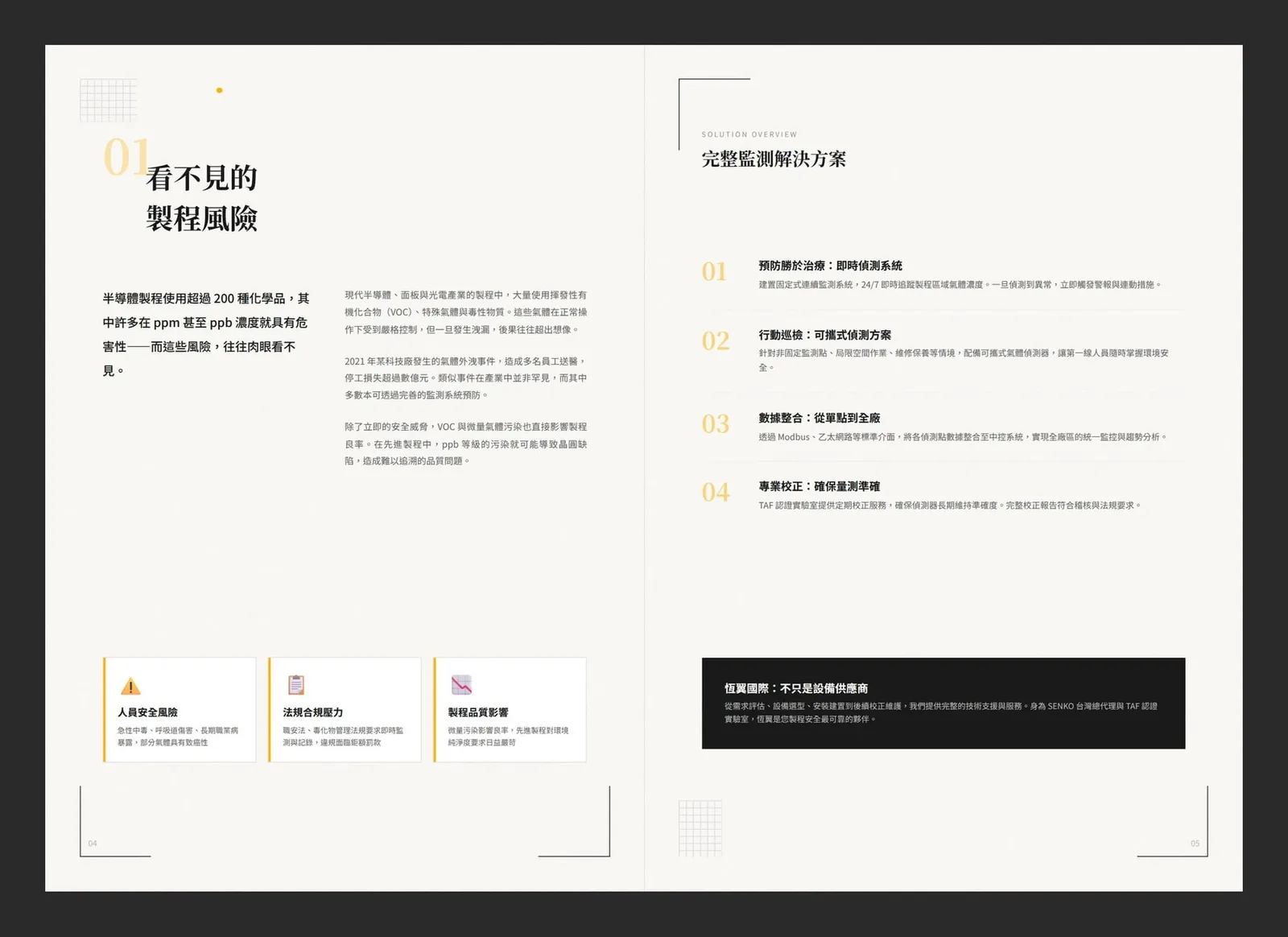
So it opens like a magazine. Before a single product appears, a feature story explains the process risks you can’t see.
It was written for the safety, equipment and procurement staff at semiconductor, display and optoelectronics plants, and planned to do double duty — a way for sales to open a conversation, and content that could become topic pages on the website.
THE PRACTICE / 03
Start from the gas
Customers start from “which gas do I need to detect”, so the catalog does too. Every gas gets a card, and the cards are grouped by hazard, not by product line.
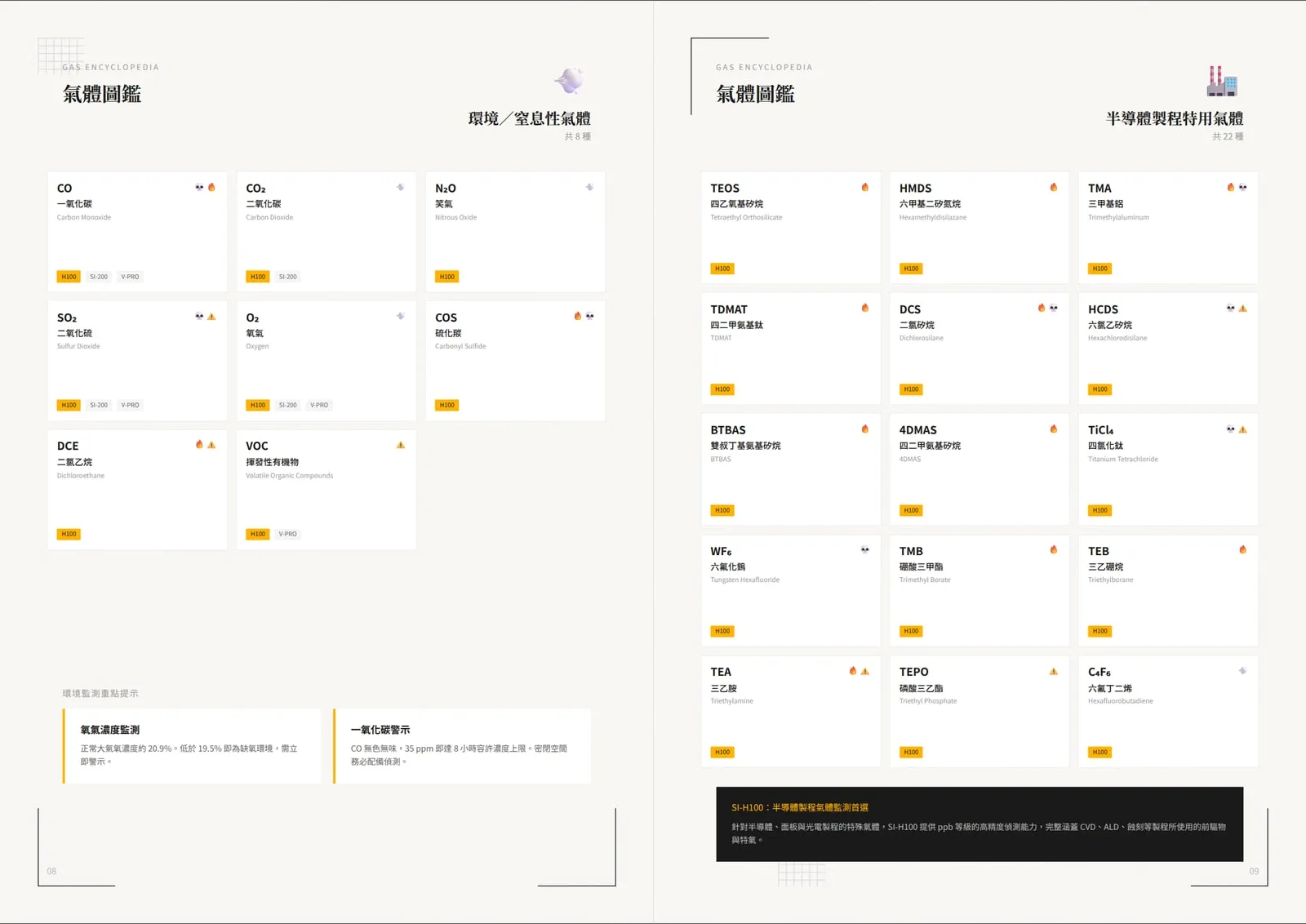
- 01One hazard family per page
The encyclopedia is grouped by hazard — flammable, acutely toxic, environmental and asphyxiant, semiconductor process gases — not by product line.
- 02The formula leads each card
Then the Chinese and English names.
- 03Hazard markers
Flammable, acutely toxic, corrosive or irritant — readable without the text.
- 04Which product detects it
The step from "which gas" to "which detector".
- 05The page closes on a recommendation
Here, the detector for semiconductor process gases.
End on the lookup table
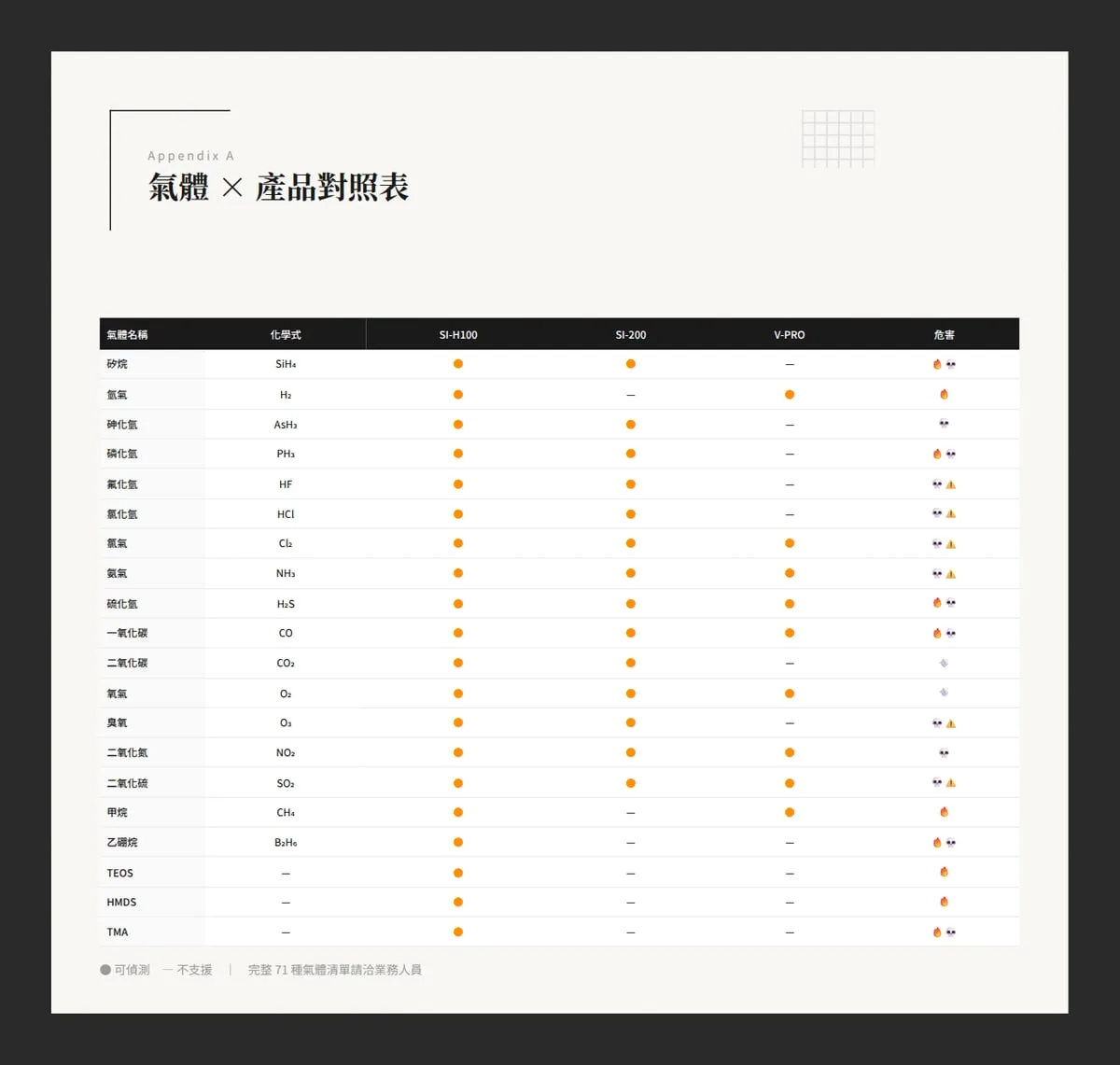
A buying guide maps each job to a recommended product, and the catalog closes with a gas × product matrix — which of the three detectors covers each gas, on one page. The page lists 20 gases and points readers to sales for the full list of 71.
THE PRACTICE / 04
One visual system
The look borrows from technical drawings — thin L-shaped frames, small grids and dot accents on a cream ground, with the brand’s yellow-orange as the only accent color. The layouts are deliberately not symmetric, so the pages don’t feel rigid. Noto Serif TC carries headings and numbers; Noto Sans TC carries the text.
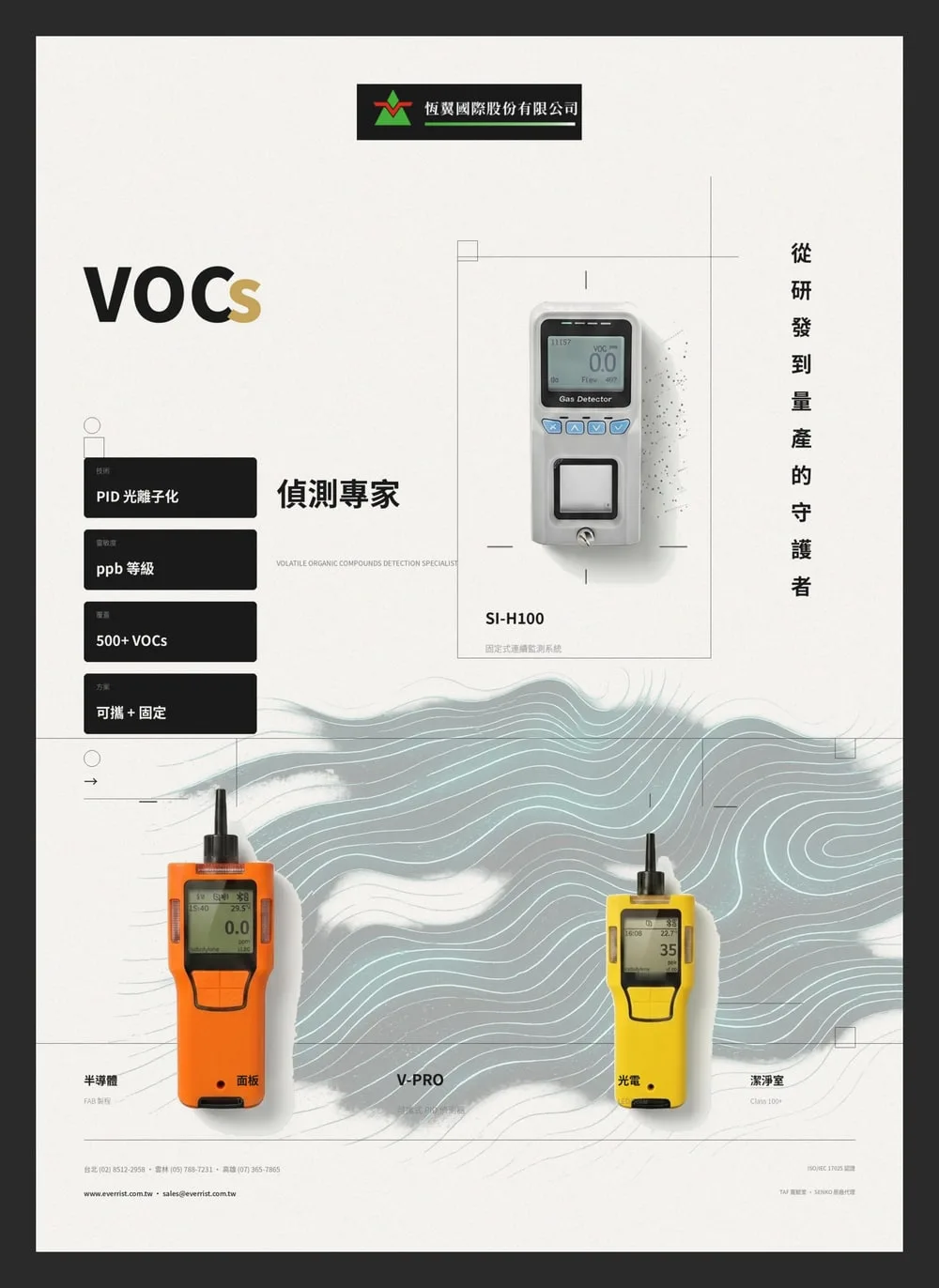
The VOCs flyer made to hand out at the same show uses the same line work, and the MGTP-P product pages use the same palette and frames.
THE PRACTICE / 05
Say only what is certified
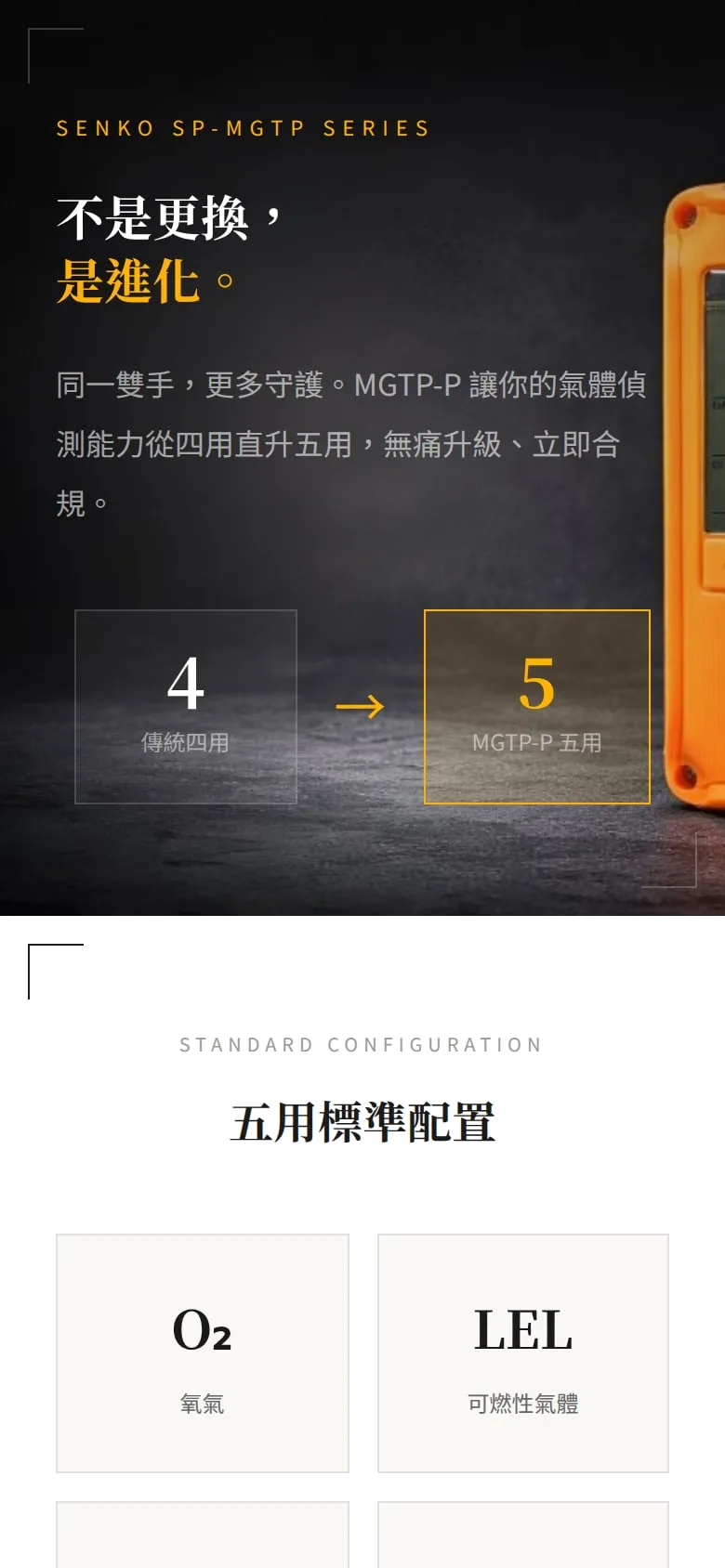
The MGTP-P pages answer the ABS 2026 requirement for CO₂ detection on ships. They say “in response to the ABS 2026 requirements”, never “ABS certified”, because the products are not ABS certified; the certifications they do hold are listed per product.
READING NOTE / VISIT
The MGTP-P pages are live.
Both pages are in Traditional Chinese.